With Sombra Del Mar band. Same place, later time: Sinori Pub, Batumi; starting at 21:30. Hopefully it will be as fun as it was last time.
Besides, I’m going full steam ahead with completing Phi Mu Labs II library for Korg wavestate AND FM-based synths that can read SYSEX from Yamaha DX7.
This is pretty much a rince-and-repeat thing for now, not much fun, but hopefully the results will be more rewarding.
-
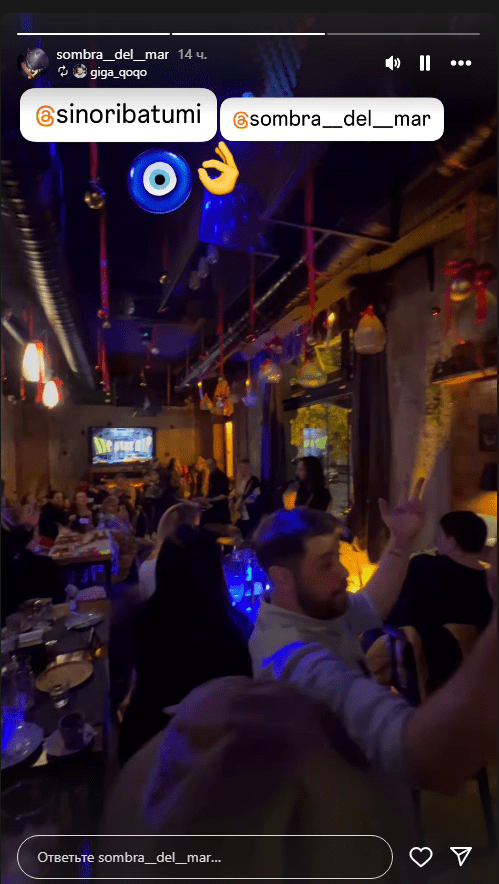
Playing live tonight
-

Farewell 2024
It was a year of hardships for me. Don’t expect them to go away next year either, but somehow under pressure I’ve yielded more than, probably, ever:
Written in memory of my friend Manticore, who suddenly passed away in late October last year. I knew him for 20 years…
A sort of chronicle of the early days of 2024, preceeding the second ‘anniversary’ of the bloody invasion of Russia into Ukraine. The Russian dictator has brought a curse down upon us, everyone born in Russia. And we failed miserably to remove him.
Released by Neotantra label, ‘Aurntengwl’ is a concept album I started back in 2021. Four tracks had been written this year, however.
Released by Moscow, Russia-based album ‘The Day of Life Forgotten’, ‘Detritus’ is black-sided sun’s most aggressively sounding LP, probably. I decided to offer it to ‘TDoLF’ because it was much more in their format, than that of Neotantra.
I also in the (belated) process of making new sound libraries for various synths. And this is probably going to be the focus of further efforts.
For now there is no music in me left.
-
‘Journeys, Wanderings and Immersions’
The independent web-label ‘The Day of Life Forgotten’ (Rus) have just released its seventh VA compilation from ‘Journeys, Wanderings and Immersions’ series. It features a track called ‘1000 Days’ by black-sided sun.
The composition had been created using only custom-made timbres for Dexed (a Yamaha DX7 emulator), SurgeXT, Full Bucket WhispAir, and NI FM8.
Below is the entire record. Have a great listen!Artwork and compilation by Ivan Kirichenko.
-

Reawakening an oldie
For some of my projects I used (somewhat maligned, occasionally) Z3Ta+ 2 synth by Cakewalk. The migration is always painful, but with this thing it is a whole new dimension of torture and misery. :-)Thing is, activating it is a very non-straightforward process, and having proper CD keys for Steam-based version in my case proved insufficient.
It even have changed a bit since 2022. Thankfully, there is now good instructions on this matter. After just a second attempt it worked :-) Turned out, it was mostly about using the newer (customized?) version of SteamReg executable – then you’ll have to run a command from the CMD utility, using your serial number.
Over the years I have accrued a bunch of Z3Ta+ 2 patches in FXP format. Sharing them now as a ZIP archive at Google Drive folder. These are the patches I’ve actually used and will probably use again. Some part of them had been dialled up from scratch, others are heavily edited factory ones.
Now, somewhere out there was a ‘Virus’ mod for Z3Ta. Gonna take a look if I find it.
-
A Treatise on Eschatology (Decembered album)
In May 2006, i.e. just under 19 years ago, I self-released the second LP with my project Decembered. It was called ‘A Treatise on Eschatology’. I was pretty much into Gnosticism back then, and basically that’s what the album was all about.
Re-listened to it recently. Although those weren’t the brightest days of mine, the first half of the album feels luminous, probably more than anything I’ve composed before and after.
But the most important track is the sixth one – Vocatus, featuring the voice of Sérénité (https://www.linkedin.com/in/marialipatova/). The recording session was tough, took some blasphemous amount of time, but in the end of the day she absolutely nailed it.
Have a listen, and take the read – a friend who opted to stay anonymous wrote a very appropriate poem to accompany the music.
As of the Soviet song in Track 7… Well, as the person who was born in USSR, I’ve been a ‘Pioneer’ for, like, two years, and was exposed to that sort of indoctrination, even if in weakened and pointless form. Still, its primary goal was dissolution of one’s personality in the collective, and the name of the song – ‘The Jolly Squad’ or ‘The Merry Link’ – feels chilling now, as it reassigns something totally individual – happy emotions – to an inanimate concept which a militant-style organized group of people is.
And it gets even more chilling that the song was written in early 1930s and published in 1947, which basically means that it has millions deaths and post-war misery as a backdrop.
So I thought the song sample would be appropriate to showcase a man-made inferno. Which is certain to collapse one day or another.
Back then I still had an illusion that the darkness of those times would never happen again. I was wrong.
-
There are three things…
…Those are totally great about gigging: first is seeing people burst into dance to a classic rock music – I didn’t expect the old rock-n-roll is still that popular. Second – a blissful hush afterwards. A relative one, of course, – in the streets even past midnight there are still cars, some people and the wind. But the last night was pretty calm, especially after all the storms that battered Batumi for days. Today stormy winds are back again.
And the third thing is feeling yourself alive. Knowing that you’ve just brought joy to quite a handful of people, and for a while can shed the bitter thoughts…
Check the latest stories at Sombra Del Mar band’s Instagram. -

Giggin’ tomorrow
Will play tomorrow late evening with Sombra Del Mar band in Batumi. For the first time. Wish me luck. We start at 21:30. Sinori Pub, 14, Marjanishvili str.
Come to see us and listen to some real rock’n’roll! -
12 years ago
A photograph surfaced at Facebook, dating 12 years back.
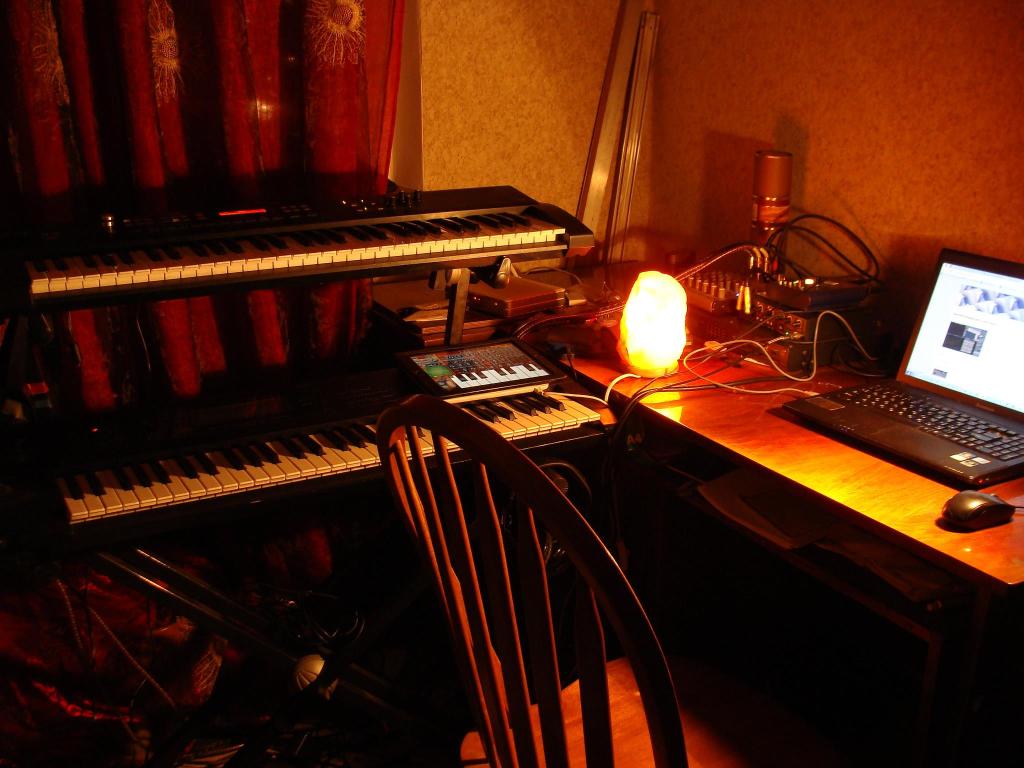
2012 wasn’t easy for me. Two creative endeavours I’ve invested a lot of efforts in crashed, I’ve lost an ability to sing and compose music for many months, and it had become totally evident that I wasn’t going to become a professional actor. Even though later I would resume performing, but without any hopes for being anything more than an amateur.
On the other hand, I have accrued some hardware – and completely legalized my software. On the stand there are Roland Juno-D (1st gen), and Korg O1/W FD, along with the iPad 3 running some synth. There were quite a few interesting software synths for iPad, especially Waldorf Nave.
On the table sit Korg Wavestation SR (with an old Behringer mixer and a very lacklustre Focusrite’s audio interface. By now I only have Wavestation with me, the rest of hardware changed ownership.
And I am irreversibly far away from the room the picture had been taken in. -

To MDB or not to MDB?
Just read somewhat a troubling news that My Dying Bride seems to have parted ways with their vocalist Aaron Stainthorpe. Or, rather, they are coming out of their hiatus (which saw them cancelling all the shows in 2024) next year and doing at least one festival with Swallow The Sun‘s frontman Mikko Kotamäki.
It is, to put it mildly, a weird development given that Aaron had been the band’s singer/growler from the day one, and was the band’s chief lyricist throughout.
With all due respects to Kotamäki, it is hard to imagine MDB without mr. Stainthorpe, even though stranger things happened. Yes, Nightwish is one such case.
Well, there is no formal announcement that Stainthorpe is excused from his position at the band permanently, so it’s entirely possible that the band will eventually sort out their differences – and/or vent them through their music.
-

Joined a cover band
Joined a cover band as a keyboardist. The Beatles, Joe Cocker, Pink Floyd, Stray Cats, etc. I guess 20 years ago I’d object doing something like this out of pride – and illusions. Now it’s just another job to sustain myself in emigration. And by all means, the good and honest one.
-
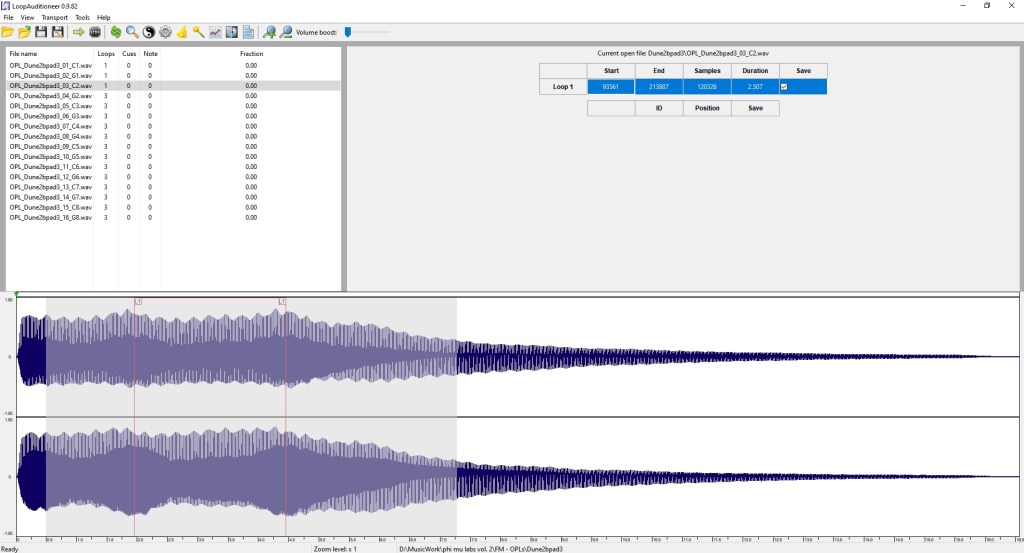
Halfway through
Going full steam ahead with making the second installment of my Phi Mu Labs – the FM-based timbres library for Korg wavestate. Cherry-picking or dialling up the timbres are fun, adapting them for the synth – much less so. Basically I render 14-16 .WAV files – two per octave (C and G notes). Some timbres are one-shot, some need to be looped. For the loop-making I use Loop Auditioneer, a free and opensource thing that allows to automate part of the job. But not entirely, and its loop-seeking routines don’t necessarily return good results. On the other hand, it allows to crossfade the loop candidate over the selected time period (up to 1000 ms), and that’s where the chore comes: sometimes you want to have as long crossfading as possible; but sometimes quite the opposite works best. Sometimes you may waste quite some time to get a single sample decently looped, because it just won’t get crossfaded smoothly enough.
The samples derived from the OPL2 emulators (JuceOPLVSTi and ADLPlug) prove to be very, err, resilient against the attempts to loop them properly in Loop Auditioneer due to their lo-fi nature. On the other hand, the loop ‘deficiencies’ would rather add to their wobbly grittiness.For now the new library seems to be much more industrial-leaning than the first part, and will be possible smaller, raw sample content-wise. Then again, it is yet to be seen.
One really bad thing about Korg wavestate’s Sample Builder software is that it cuts off everything past the loop’s end. A lot of information gets wasted eventually. It would be nice is Loop Auditioneer allowed to cut the sample and discard all that isn’t needed. But, again, it’s a free software thing. It owes nothing to anyone. -
Struck Gold. Sort of…
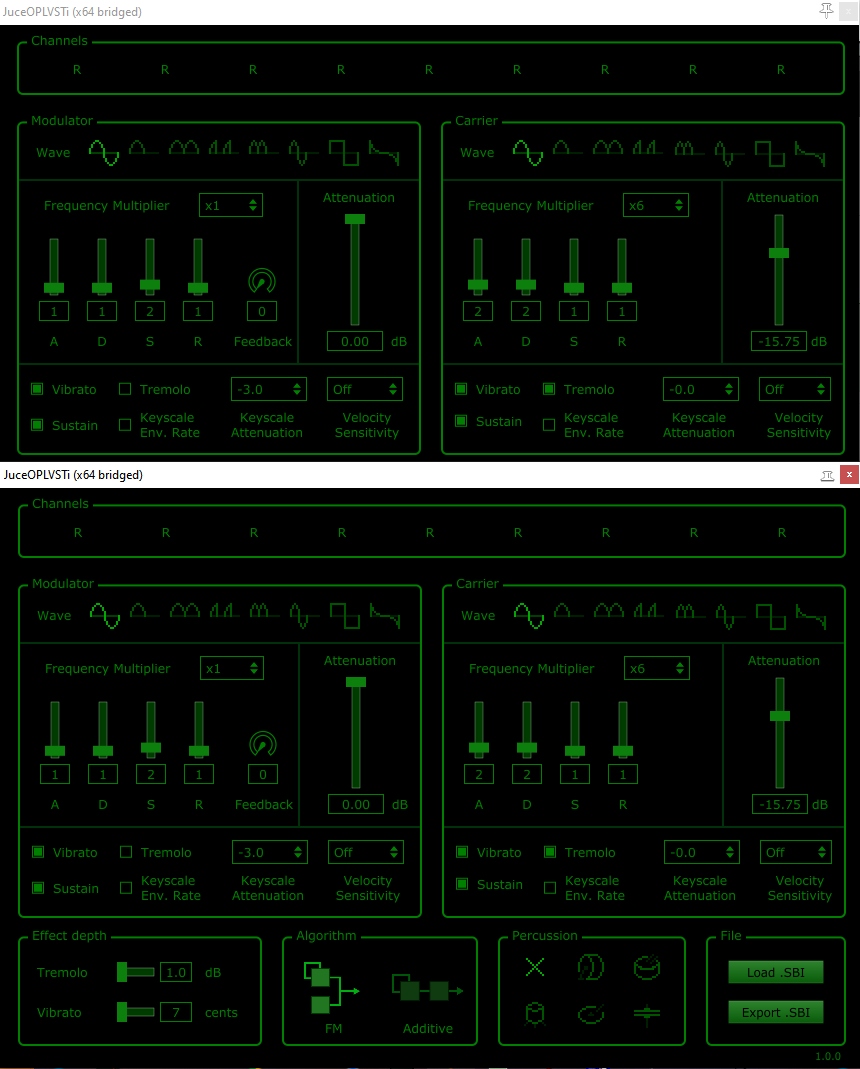
Finally looked a bit more dilligently into a bunch of SBI files on my hard drive, and discovered a ‘golden lode’ – a number of timbres from Dune II: Building a Dynasty (aka Battle for Arrakis), the ‘mother of all real-time strategy games’.
SBI stands for Sound Blaster Instruments: those are tiny files of instructions for early SoundBlaster and AdLib soundcards based on Yamaha’s ancient FM synthesizer chips. Those synthesizers are very simplistic, basically just two operators, although they are capable of producing more waveforms than just the classic sine, and this makes them pretty much incompatible with the professional DX/TX series of Yamaha’s synths. I have covered this in a longread for my gaming-related project – Facelifted Gaming – at Substack and Instagram.
Well, since the DOS games still have a cult following, there are whole-range PC hardware emulators like DosBox, that also simulates thos FM chips, namely YM3812 (also known as OPL2). No surprises that eventually they have been forked and turned into VSTi instruments, capable of reading (and sometimes writing) SBI files, along with the zoo of other flavours.
JuceOPLVSTi (see screenshot) is one of them. RN I’m rendering those timbres into .wav files in order to adapt them for Korg wavestate as part of the second volume of Phi Mu Labs soundpack. With some petty trickery to make them sound as rough and lo-fi, as though sounding through the original hardware, – but in stereo. Why? I firmly believe these ‘chirpy-n-chippery’ sounds are a great building block for sound design. And not just for the ‘retro’ sake alone.
Look below: it’s a fully fledged professional synth based on those very OPL2 chips. -
Going live tonight
Will improvise some dark ambient with my #blacksidedsun project later tonight. If I get lucky, I’ll be able to record some stuff too. Not sure yet, though.
-
Phi Mu Labs: Origin
Here goes the first demo for two dual packs of patches for Yamaha DX7/TX7 and all of their ilk provided those are 6-operator+ synths, hardware or software. I’ll make them available later this year, separately and with Korg wavestate version of these timbres.
-
Didn’t quite plan it, but…
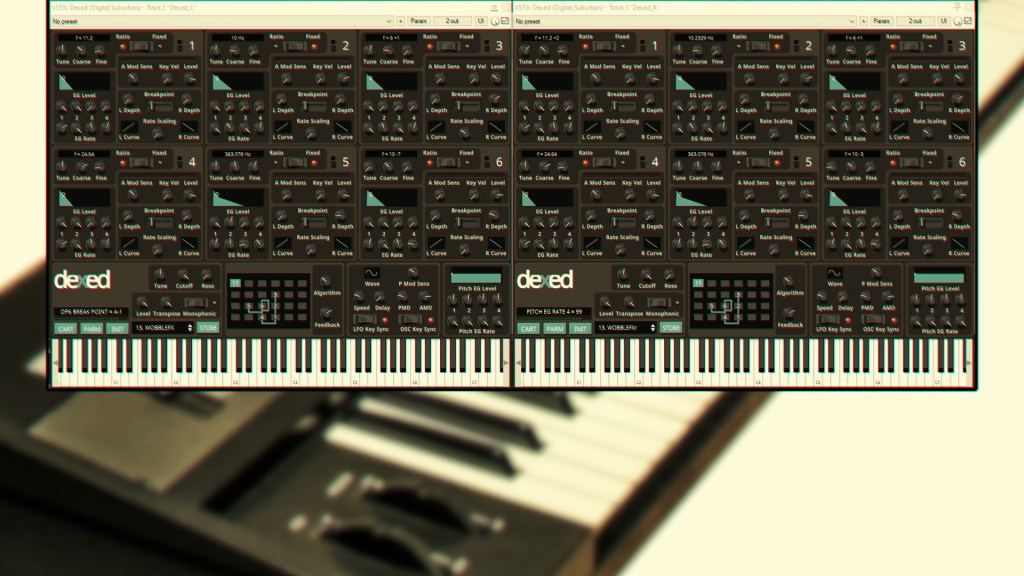
…Dialed up yet another double bank for DEXED. Also should be loadable to any hardware or software FM synth capable of reading Yamaha DX7-compatible SYSEX. Surely, the demo will follow soon. Probably these sounds will be offered separately from Phi Mu Labs 2 pack for Korg wavestate. Although I’m still thinking what’s the best source of action here.
All the sounds had been made up from scratch, not editing the third-party ones, although I used the latter for reference occasionally. Most of the timbres are pads or adjacent, some are FXs, and there are several basses.
Image is provisional quickie ;)In the unrelated news, it looks like I’m joining a rock covers band. Not quite my dream come true but, again, working with competent people is always encouraging. And these people are competent.
-
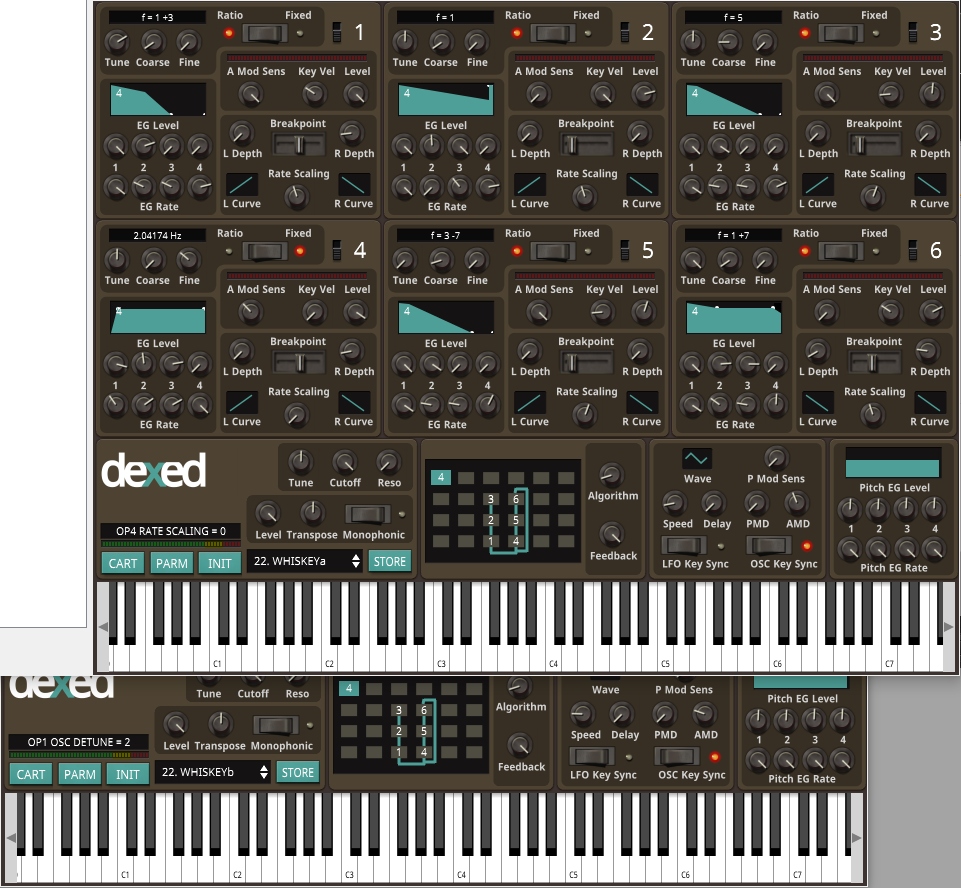
FM adventures
I’ve owned Yamaha DX7 for many years. Got it second-hand in a working, but cosmetically drastic condition. For a time being it was one of the keyboards I used religiously both on stage and in studio, considering it much more of an ‘honest’ synthesizer than any ROMplers I owned aside from that.
However, since discovering DEXED, I’ve gradually switched to it almost entirely: free, close to the original (at times better to my taste even), and doesn’t weight 14+ kg.
What I have never quite done before was trying to program a patch from scratch. In fact, there is some crazy amount of DX/TX-series patches presented in SYSEX format on the Web, and most of them are readable by DEXED.
There are just too much ready-to-go timbres to be used in your compositions.
Meanwhile, FM synthesis is a notoriously hard nut to crack on its own and, frankly, the way it had been implemented in DX7 wasn’t terrifically user-friendly.
DEXED streamlines the process a lot, however, it sticks with the original implementation of envelopes, and this alone takes a lot to get used to. Especially compared to other synths, even FM8.
In fact, after having fun with FM8 DEXED feels very rigid about routing: in FM8 you can route any Operator to any other, whereas Yamaha DX7 and DEXED offer only 32 algorithms, i.e. prewired combos of the operators.
Still, making patches for DEXED turned out damn addictive.
Just finished a dual pack of 32*2 timbres, set up so that it can be used on their own or in pairs for stereo effect. Fire up two instances of DEXED, pan them left and right, load up the patches with ‘a’ suffix to the left and those with ‘b’ to the right and here we go.
The demo will follow soon. I will add the samples produced with these timbres to the next part of Phi Mu Labs library, which, I think, will be ready by Xmas.
Stay tuned!
-

A Night in November
A demo to LUMINOPHORE pack had been uploaded on Youtube.
And I’ve started working on a new pack – this time for DEXED. It will be, most likely, compatible with Native Instruments FM8, Arturia DX7V, Plogue Chipsynth OPS7, SynprezFM, and every DX7-compatible 6-operator hardware synth that can read DX7 SYSEX files. -
Luminophore pack for Surge XT
Finished my first pack for Surge XT synth, and must I say I’m incredibly impressed with this synth’s capabilities. Tried to employ them at depth.
Earlier today I’ve cooked up a 16-minutes long ambient demo featuring some of the sounds. No other synths, no external effects except for a featureless limiter on the master bus (for safety purposes only).
My current keyboard lacks aftertouch of any kind, but instead I have a foot controller. For some patches I’ve enabled Channel AT, and for each one – Filter Cutoff (CC74), Filter Resonance (CC71), ModWheel and Foot Controller (CC04).
This means, among other things, that all patches require MPE mode on for using standard MIDI controls. Besides, it is necessary to assign by hand MIDI CC 71 and CC 04 (or any other unreserved control) to Macro 1 and 3, respectively.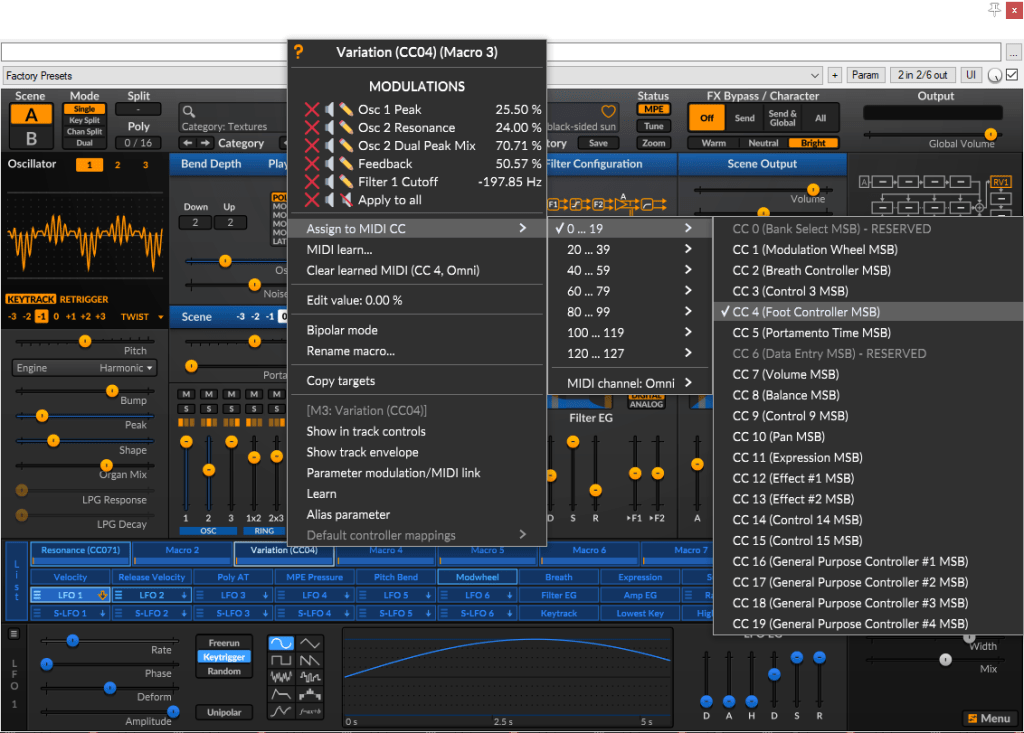
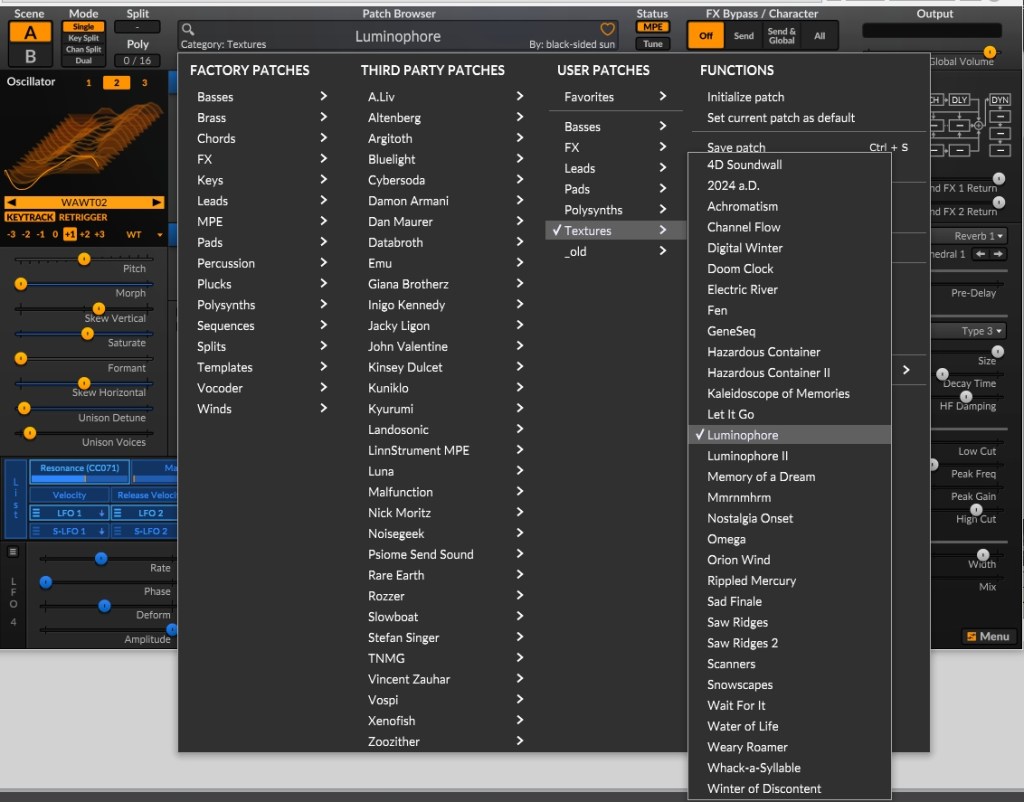
The soundpack features:- 64 patches
** basses: 2 items
** FX: 3 items
** Leads: 8 items
** Pads: 9 items
** Polysynths: 11 items
** Textures: 31 items - 36 custom wavetables
(Created using AUDIOTERM software by Matthias Gurk).
[DOWNLOAD]All patches are presented as separate FXP files, the default format for Surge XT on Microsoft Windows.
To install them simply unzip the contents of bss_lumphr_p.zip to Surge user patches folder. By default it is
\Documents\Surge XT\Patches.Drop the contents of bss_lumphr_wt.zip to \Documents\Surge XT\Wavetables folder to use them separately.
LUMINOPHORE pack is offered free of charge, as is, under SURGE XT default CC0 license.
- 64 patches
-
Perplexed
Increasingly surprised how any software synths worked at all like 10-15 years ago.
For one, I’ve got an old Core i7 with 2.81 GHz cores, and Surge XT hits the roof with RT CPU values unless the patch is optimized heavily.
On the other hand, it’s a reason to actually optimize things there.
I have 64 patches now, and the only things left to do is to add MIDI modulation controls (I didn’t figure how to do that initially), and make a demo. The latter is the hardest part. -
Going to gig tonight
Will go live with my black-sided sun project. A semi-improvised program: a laptop, keyboards, maybe some recital.
Hopefully will make some distraction from the darker thoughts and moods. Hopefully.
-

Missa Pro Defunctis
I didn’t list it among my works for two reasons: first, I forgot, second, it stays incomplete, like quite a few of other my projects. I hope to finish it one day, but it will require a Herculean effort.
Missa is dedicated to memory of both my godfather and father. They both have departed in 2017, within the same month…
I ended up composing the orchestral part in 2018. It was, probably, the first of my works that did not include any synthesizers, only orchestral libraries.
Listen to my Requiem: https://soundcloud.com/yilyin/sets/requiem -
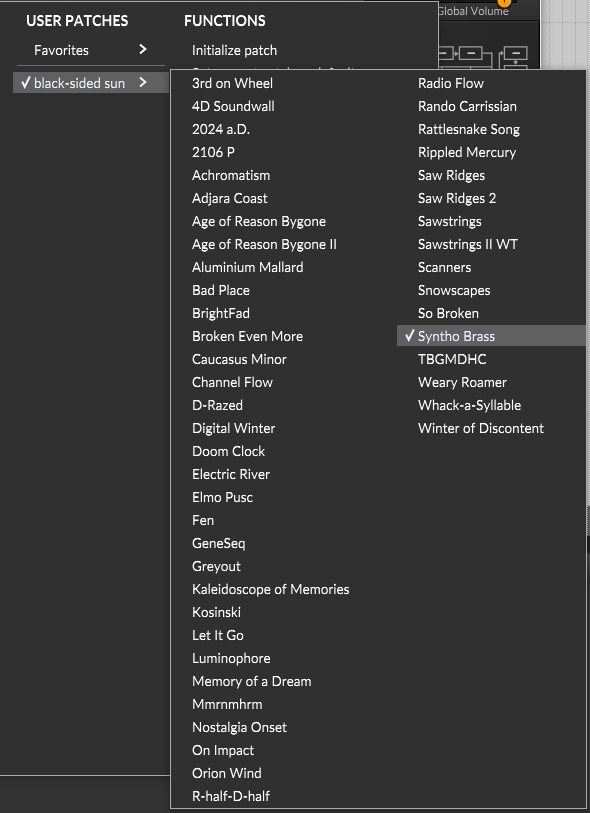
The list is growing
Yet I’m trying to shed the thought I’m doing it all wrong and the effort is rather pointless – there are so many premade patches for Surge XT already, who would even take a look at the newer bunch.
To hell with that, anyway. While making these patches I’ve actually learnt a thing or two, and reproduced some sounds I was looking for. Worth the effort. -
Giggin’ on Halloween
Will play keyboards with a quickie band, performing some bluesy-rocky stuff. Not much of a deal. In fact, expats musicians are largely playing for their kin, locals ignore such events for a few reasons. Shame, really. Also, shame that it’s mostly about playing covers, not some original music – people largely want to hear what they have heard before these days.
Occasionally have some darker thoughts on this. Like, you know, the sense of any meaningful future is lost in general, a critically large amount of people worldwide feel like everything good has already happened, even more, than there was some golden age, and it would be cool to go back. But that’s bullsh*t. Nevertheless, it looks like a worldwide wave of archaic characters declaring a war against the modernity – and the future itself. And so many unscrupulous, or plain malicious politicians are happy to ride this wave driving crowds into madness.
I guess, archaism is the primary driver for all hate crimes and all ongoing wars these days. The past tries to stop the time and even reverse it. ‘Warlock’-style.
It won’t work. But – the human civilization has known the outbursts of de-sophistication followed by the dark ages that would go on for, well, ages.
Today I’m basically an electronic musician and a journalist working remotely. Tomorrow there’s no electricity – and what do I do then?.. -
17 patches so far
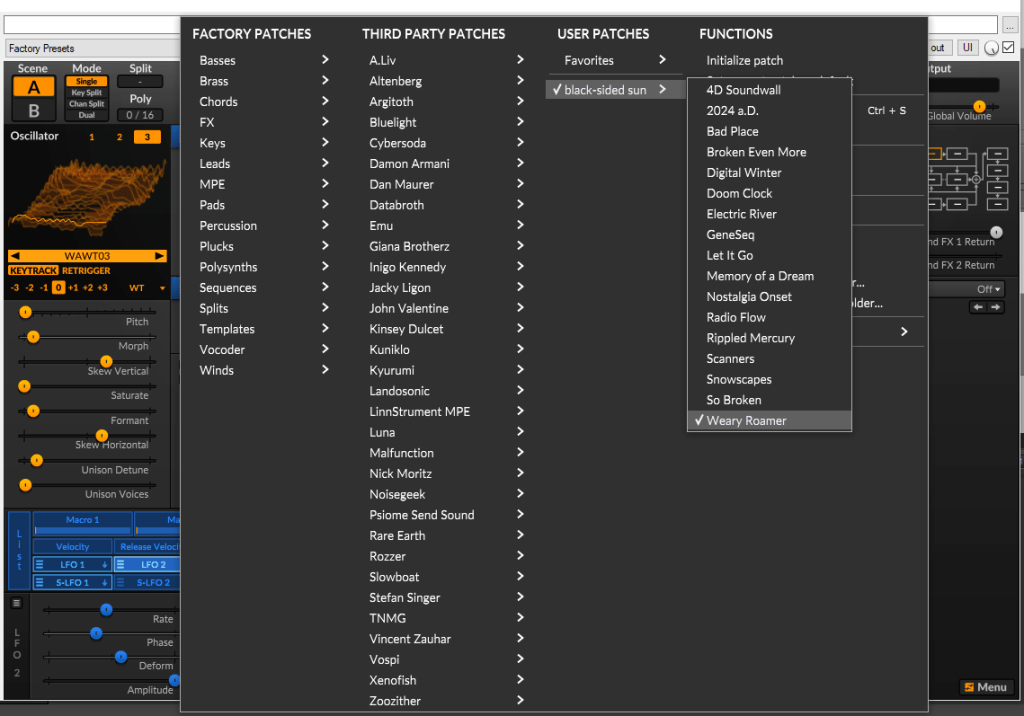
This is roughly 1/5 of what I plan to do. Custom wavetables, etc. Mostly ambient stuff that, hopefully, will work in other people’s mixes too.
Surge XT is great. I thing I was spooked off it with a somewhat difficult interface. Now, however, I feel it’s very intuitive and cozy.
And sounds is preeeeetty. :-)
-
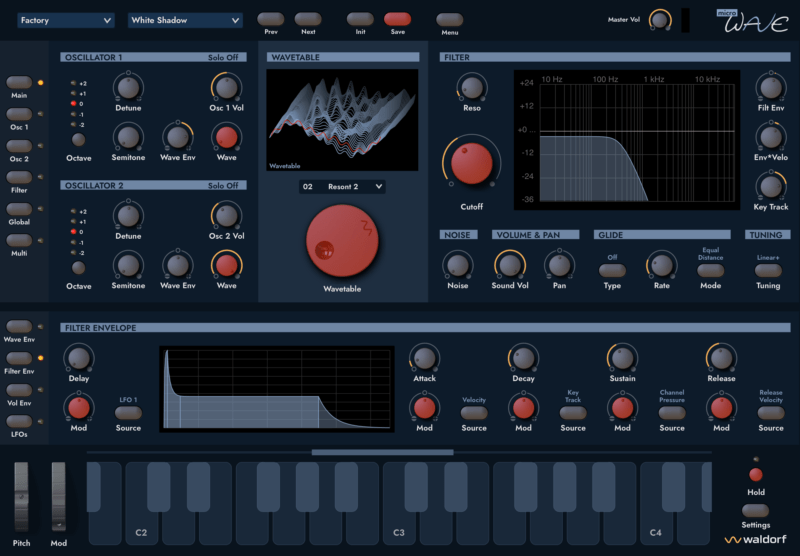
Microwave comes to iPad
Waldorf rocks hard this year. First they’ve recreated their classic Microwave synth in software as a plugin for macOS and Windows. Now, they’ve taken it to iPad. Interestingly, in the past they’ve done quite the opposite: first they’ve launched a fascinating Nave on iPad, then ported it as a plugin. Regardless, their plugins and tablet synths are top-class, always.
Costly too. -
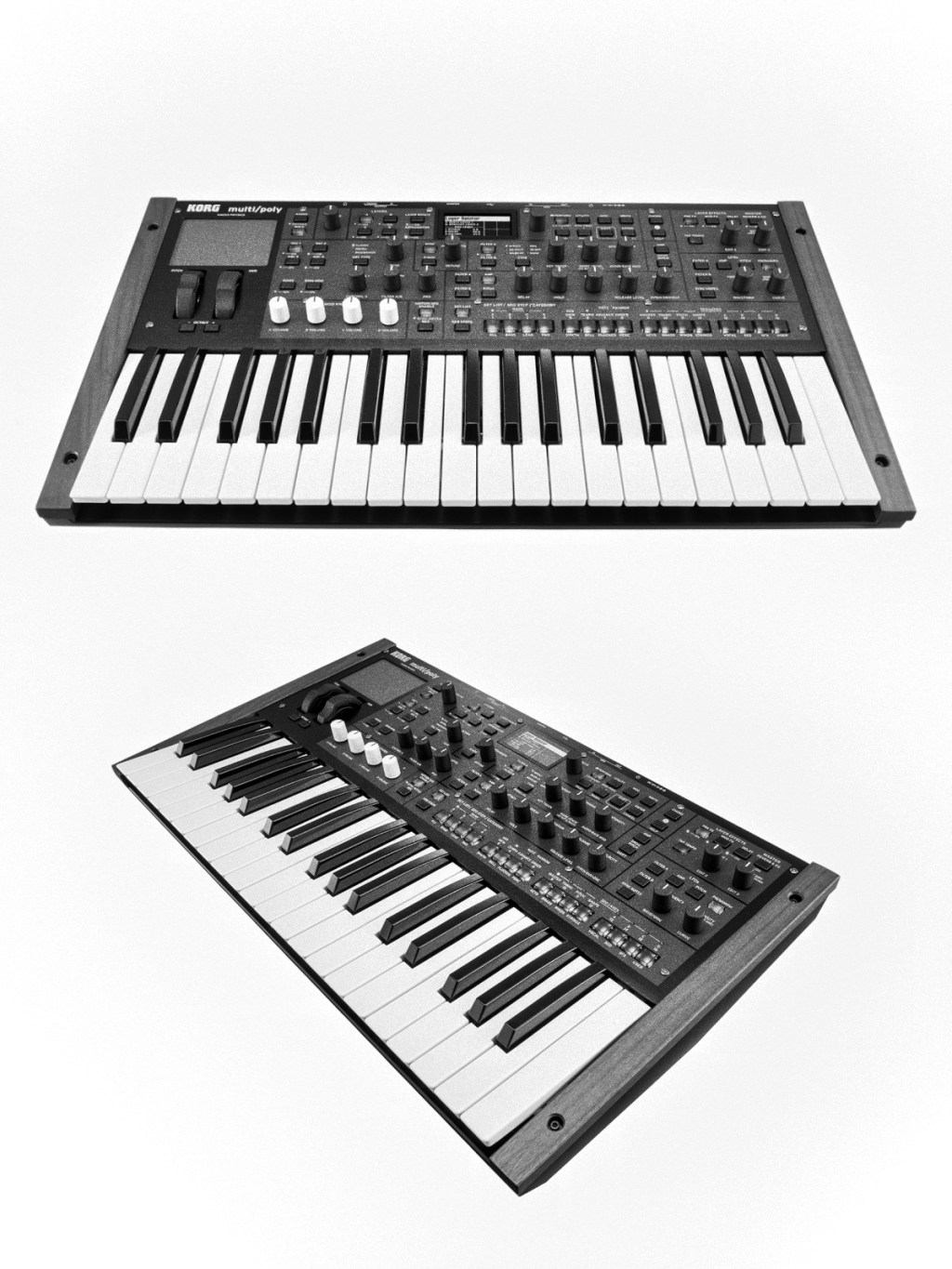
Fourth of a kind
Korg have released a new synth called ‘Multi/Poly‘, and it appears to be a way different thing than the name suggests: it’s not a new version of their venerable Mono/Poly (which had been reimagined in software more than once, and eventually had been cloned-n-reintroduced by Behringer).
MusicRadar states that it doesn’t feel nor sound like a Mono/Poly, but it’s a capable instrument on its own.
From the look of it, multi/poly seems to be a yet another sibling to Raspberry Pi-based family of synths: Wavestate, Opsix and Modwave. Korg had definitely struck gold with them, both in regard to sound and form-factor.
Multi/Poly is a digital, analogue-modelling synth that has four oscillators on board, which makes a reference to Mono/Poly. On the other hand, it carries dozens of the same wavetables as utilized in Modwave. So yeah, it’s definitely the fourth of a kind: a wave-sequencing/advanced vector synth – check, an FM-synth – check; a wavetable synth – check; now they are joined by an analogue modelling/wavetable hybrid.
I wonder what will be a wild card eventually?
-
Audioterm
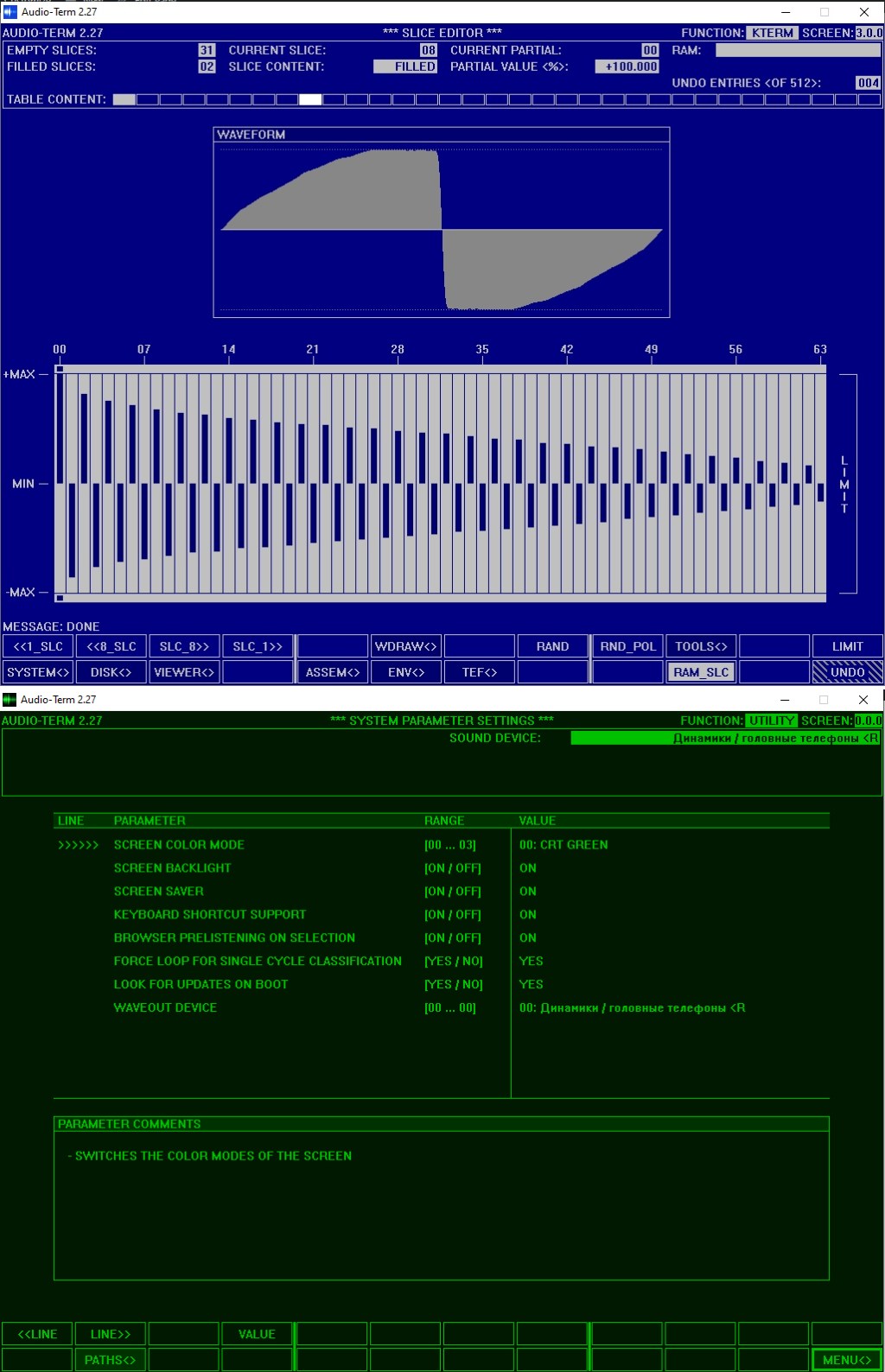
Having tons of fun with this software. In short, it’s a wavetable-maker with some very neat functionality. I haven’t been much into wavetables before, but it’s really going to change. The software is free, and is made to look vintage on purpose: after all it’s been inspired by PPG Waveterm hardware computer from early 1980s, used for wavetables creation specifically for PPG Wave 2.2 synths.
Although Audioterm by Matthias Gurk can only output a bouquet of up to 33 single-cycle wavetables, there are tons of neat functions that may give you some extremely unpredictable sounds that can be then refined to very unusual but also beautiful timbres. Surely take a look. It can output wavetables in multiple formats, so if you have a synth that can load custom wavetables at all (among the freeware ones – WhispAir and Surge XT can do it), this software may become your beautiful friend.
There are other freeware wavetable-makers out there, however, and I’m going to study them too.
P.S. It’s a shame that Native Instruments Massive (the classic one, not X) can’t take in custom wavetables, though.
-
Hello and welcome
I have finally made a more decent site for my efforts than I used to have prior to war. It features links to, like, 90% of my recorded and published (this or that way) works, including music for my own projects and the commissioned ones.
Right now I’m non-involved and open for cooperation. I’m most interested in work in the film or video games. The latter sphere is particularly desirable, since I am an avid gamer myself, a gaming blogger of sorts and a freelancing 3D artist as well.
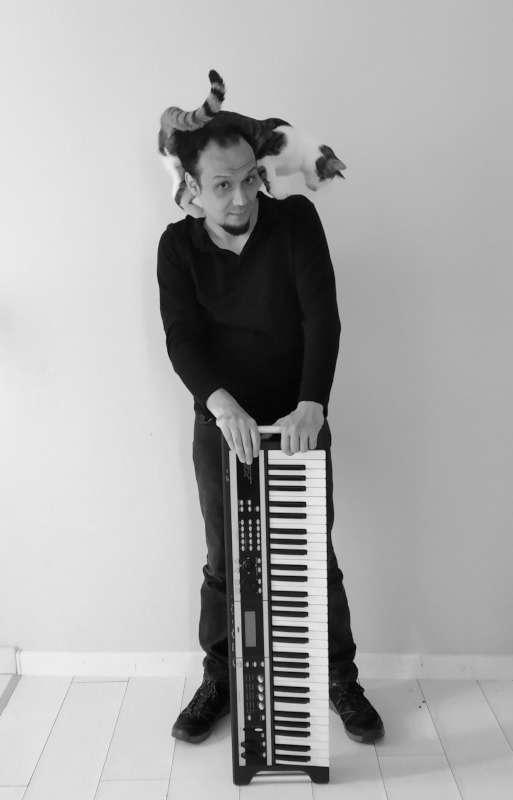
…That thing below? Aye, it’s Korg X50, a stripped-down version of Triton, and in my view it outperforms its price fascinatingly.
…Ah, on my shoulders? That’s Boson the Cat, currently a two years old cat adopted here in Georgia/Saqartwelo. Me and my wife are guardians to a small cat zoo – five furry individuals who just love to run amok in the early hours, just before dawn.Their activities cost at times: last year they have forced the synth down so hard that a keyboard section had to be replaced. Still – it’s much better with them than without.

